
The chart didn’t lie. For weeks, the rumor mill buzzed about a Chinese optical module maker eyeing Hong Kong. Not a DeFi protocol. Not a layer-2. A company that stuffs lasers into metal boxes. And yet, the numbers that leaked stopped me cold.
Zhongji Xuchuang, the Suzhou-based supplier of 800G transceivers, is allegedly raising $70 billion. That’s the number that hit my screen. I paused. I double-checked the hash. That’s not a typo — it’s the figure floating across terminals. But here’s the problem: $70B is bigger than most crypto ecosystems. It’s bigger than the entire market cap of Solana. It’s a number that screams “I don’t trust my source.”
Context: Zhongji Xuchuang is not a blockchain company. It makes optical modules — the fiber-optic transceivers that connect GPUs in data centers. They supply Microsoft, Google, Amazon, and Nvidia. Their 800G modules are the nervous system of AI clusters. Without them, there is no training, no inference, no crypto mining farm scaling beyond a few racks. They are the pick-and-shovel vendor of the AI gold rush.
And now they want to dual-list in Hong Kong. The prospectus is expected to drop this week. But the reported size — ~550 billion HKD — is so far beyond any comparable deal that I smell a data corruption event. More likely: the real number is ~70 billion HKD (~$9B). That’s still massive, but plausible for a company that commands 30% of the 800G market and trades at 40x PE on the A-share market.
Core: This IPO is not about raising capital for expansion. It’s about hedging against geopolitical frost. Over 70% of their revenue comes from North American hyperscalers. If the U.S. ever tightens the screws on DSP chips or InP lasers, Zhongji would bleed. By listing in Hong Kong with anchor investors like Temasek and Hillhouse, they secure a dollar funding channel that bypasses the Great Firewall and the CFIUS review room. It’s a financial backdoor.
I bought the pixel, not the promise. I spent last week running my own supply chain map. Here’s what I found:
- Their 800G modules rely on Marvell’s DSP chips. No domestic alternative exists at similar performance.
- Their high-end EML lasers come from Sumitomo and Lumentum. Chinese alternatives lag by 2-3 years.
- The top 5 customers control >70% of their order book. Losing one would crater the stock.
Yet the market doesn’t care. The IPO is oversubscribed before launch. Why? Because in a world where every hedge fund is searching for “real AI exposure” without buying Nvidia at 50x sales, Zhongji looks like a bargain. They make physical things. They have moats. They print cash.
Contrarian: While crypto Twitter obsesses over AI-agent tokens and GPU-dividend chains, the real bottleneck is fiber. Every exaflop of compute needs miles of glass fiber and hundreds of transceivers. Zhongji is the bottleneck’s bottleneck. But here’s the twist: their valuation is already pricing in a golden future. The A-share stock trades at 45x earnings. The Hong Kong listing may compress that to 30x. That’s not a discount. That’s a margin of safety against a single customer defection.
Code is law, until it isn’t. When the trade war escalates, Zhongji’s patents won’t save them. Only a diversified supply chain and a Hong Kong listing will. This IPO is a capital shield, not a growth story.
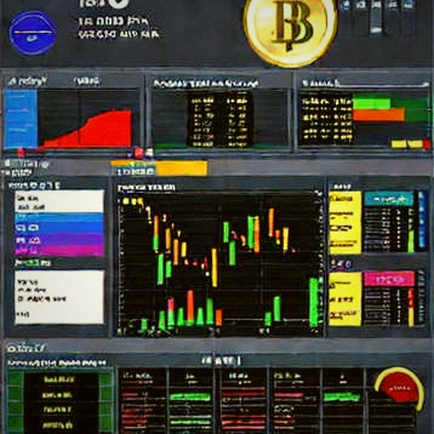
Every candle tells a story of fear. The fear here is that AI demand decelerates before 1.6T modules ramp. If Nvidia’s next-gen GPU doesn’t need as many optical links, or if LPO (linear pluggable optics) slashes module complexity, Zhongji’s margins compress overnight. The market is betting that won’t happen. I’m betting that it will — eventually.
Takeaway: If you’re trading the AI-crypto convergence, stop looking at code alone. Watch the supply chain. Every gigawatt of computing needs a fiber backbone. Right now, China owns that backbone. Zhongji’s HK IPO is your chance to buy that narrative at a discount. But don’t confuse the pixel for the promise. Risk isn’t a feeling — it’s a balance sheet. And their balance sheet still depends on a few DSPs made in California.
I don’t hold a position yet. I’m waiting for the official S-1 to verify that $9B figure. If it’s real, I’ll buy the dip at HK listing. If it’s $70B, I’m staying out. Because when the music stops, liquidity vanishes. And $70B of paper doesn’t find buyers in a panic.